


Disney+
Disney
I spent time with Disney+ as an entertainment app rather than treating it as just another place to tap play. The difference becomes most obvious when your internet connection changes. With a strong connection, the service feels smooth and inviting: you can move from a familiar movie to a series episode or an Original without much effort. With an unstable connection, the quality of the experience depends less on the size of the catalog and more on how patiently you handle loading, playback interruptions, and changing video quality.
That makes this app a particularly interesting choice for people who watch across phones, tablets, and other supported screens. Disney developed it for a broad audience, but the best experience still depends on where and how you watch. A reliable home network turns it into an easy evening companion, while mobile viewing requires more planning. I like it most when I use it deliberately: choosing something before I leave, checking that the connection is dependable, and avoiding the assumption that every viewing situation will behave like a strong home Wi-Fi session.
How Disney+ feels when the connection is doing the work
A polished starting point for familiar viewing
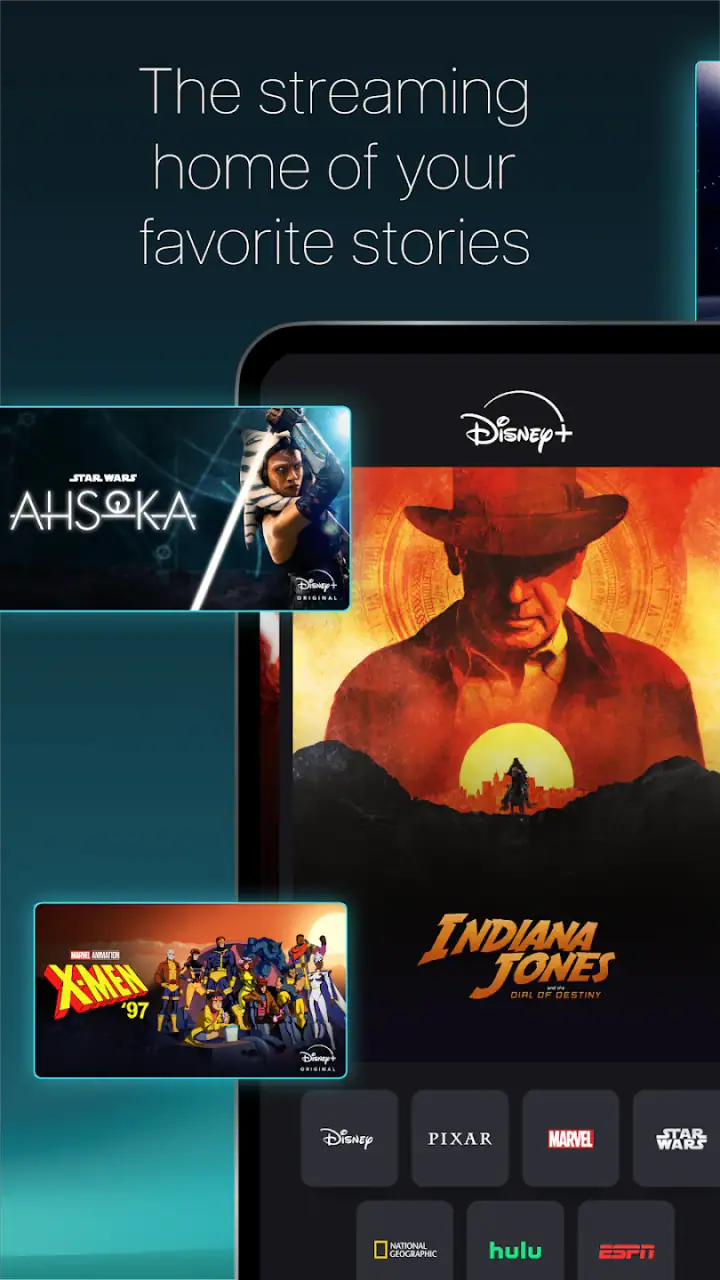
The main appeal is straightforward. Disney+ brings movies, television shows, and Originals into one entertainment app, with Disney as the developer. The interface is built around browsing, so it suits the moment when I know I want to watch something but have not decided exactly what. I can approach it through a recognizable character, a particular franchise, a series, or a general mood, rather than beginning with a blank search box.
That browsing style is useful for families and for casual viewers, although it can also encourage indecision. A large selection is not automatically a better decision-making tool. I sometimes open the app intending to watch one episode and spend several minutes comparing possibilities. The service works best when I already have a rough idea in mind, especially on a phone where scrolling through artwork is less comfortable than on a larger screen.
Its audience reach is reflected in an average rating of 4.3 from around 4.9 million ratings, with around 186 thousand written reviews. More than 100 million installs also show that this is not a niche streaming experiment. Those figures do not make every session perfect, but they do explain why Disney+ feels like a mature mainstream option rather than a specialist catalog app.
Related News

Why WhatsApp Messenger Still Makes Everyday Communication Feel Easy

Jurassic World: The Game Is the Better Dino Tycoon for Strategic Players

Threads in Real Life: Who Should Join, Lurk, or Leave

How SHEIN Turned Shopping Into an Endless Content Feed

How to Make Fortnite Feel Smarter on Mobile

Should You Switch to Microsoft Outlook on Mobile?
Why network quality changes the mood
Streaming is the center of the experience, so the connection becomes part of the product whether I want it to or not. On a stable network, starting a film or continuing an episode feels almost invisible: the app gets out of the way and lets the content lead. When the connection fluctuates, the interruption is much more noticeable because the activity has no meaningful substitute inside the same moment. I am not browsing a news feed while waiting; I am waiting to watch.
This matters most during high-demand household moments. If someone else is using the same connection for a video call, a game update, or another stream, playback may feel less dependable than it did earlier in the day. I would not judge the app solely by one difficult session, but I would judge it by how often my normal viewing environment creates those sessions. Disney+ is convenient when connectivity is predictable; it is less relaxing when the network is shared or inconsistent.
One realistic evening with the app
Imagine getting home after work and wanting a simple family movie night. I would open Disney+ on the home network, choose a title everyone recognizes, and start playback before settling in. The first few minutes are a useful test: if the picture starts cleanly and remains stable while other household devices are active, the app has done what I need. If it pauses repeatedly, the problem becomes social as well as technical, because everyone is now discussing the connection instead of the film.
Gallery
In that situation, I would first stop unnecessary network activity rather than immediately blaming the app. I would also avoid repeatedly closing and reopening it, since that rarely solves a weak connection by itself. If the issue continues, switching to a less congested network or waiting until the connection is stable is more sensible than turning a short movie into a troubleshooting session.
Using it on a phone away from home
Mobile viewing changes the trade-off. A phone makes Disney+ easy to carry into a commute, a waiting room, or a quiet lunch break, but the smaller screen makes interruptions feel more disruptive and cellular data can become a concern. I prefer using it on mobile when I have a clear window of time and a dependable connection, not when I am rushing between places with uncertain coverage.
The app is also more comfortable for shorter sessions on a phone than for an entire long film, at least in my experience. A series episode can fit naturally into a break, while a feature-length movie demands more battery, attention, and network confidence. That does not make mobile use a weakness, but it does mean the same title can feel perfectly suited to a television and merely acceptable on a handset.
Before starting a mobile session, I would check whether the phone is already handling other demanding tasks and whether the connection is strong where I plan to watch. I would also be careful with automatic assumptions about availability away from a network. The app is designed around streaming, and I would not plan a trip around content being accessible without a live connection unless I had personally confirmed the relevant option in my current app setup.
What happens when playback fails
Failures are easier to tolerate when recovery is clear. My first response to a pause is simple: wait briefly and see whether playback resumes. If it does not, I check the connection, try again, and consider whether another device is consuming bandwidth. This order matters because restarting the app cannot repair a genuinely weak network.
If the app has been left open for a long time, closing it and launching it again can be worthwhile. I would then retry the same title rather than changing several settings at once, because isolating the problem makes the next step clearer. A single failed start may be temporary; repeated failures across different titles point more strongly toward connectivity or device conditions than toward one piece of content.
There is also a practical difference between an app failure and a network failure. If browsing remains responsive but video will not begin, I suspect the playback connection first. If the entire interface is slow or unresponsive, I would give the app a clean restart and check the device. This small distinction saves time and prevents the common mistake of repeatedly tapping play while the underlying connection is still struggling.
Keeping data use under control
Streaming over cellular data deserves deliberate attention. Video can consume a meaningful portion of a mobile allowance, and the temptation to start “just one episode” can turn into a much longer session. I would reserve extended viewing for Wi-Fi whenever possible and treat cellular playback as an occasional choice rather than my default habit.
A useful routine is to decide the viewing length before pressing play. For a short break, one episode is easier to control than open-ended browsing. I would also avoid leaving a title running while doing something else, especially when the phone is connected through mobile data. The app is entertainment, not background audio, so unattended playback can create unnecessary consumption.
Network conditions can also affect perceived quality. In a crowded location, a stream may not look or behave as consistently as it does at home. Instead of assuming the app is permanently underperforming, I would compare the same device on a stable Wi-Fi network. That simple test helps separate a service problem from a local connection problem and gives a more honest basis for deciding whether the app suits my routine.
Where the app stands beside other streaming choices
Compared with a general video platform, Disney+ feels more focused. Its identity is tied closely to Disney’s entertainment world, which is a strength if that is what I or my household already watch. I spend less time filtering unrelated material, but I also get less variety outside that central identity. Someone seeking a broad mixture of independent videos, live material, or user-created clips may find a general platform more flexible.
Compared with a service built around constantly changing recommendations, Disney+ can feel more destination-oriented. I open it with a particular kind of viewing in mind rather than expecting it to cover every possible taste. That focus is helpful for families who want recognizable choices, but it is less persuasive for viewers who subscribe mainly to explore unfamiliar genres across many studios.
The app is free to install, though access to the full entertainment experience is connected with in-app purchases ranging from $11.99 to $999.99 per item. I would therefore distinguish between downloading the app and deciding whether its available access model fits my budget. The free installation is convenient for trying the interface, but it should not be confused with unlimited viewing at no cost.
Who will appreciate it most
I think Disney+ is a strong match for households that already value Disney movies, series, and Originals and want them gathered in one recognizable place. It is also appealing to viewers who prefer a curated entertainment identity over an enormous mix of unrelated videos. Parents and families may appreciate the familiar presentation, while individual viewers can use it for planned evening watching or occasional mobile sessions.
The content rating is Teen, so I would still make viewing choices with the actual household in mind rather than assuming that every title has the same tone or suitability. A shared account environment can include very different kinds of entertainment, and the age label should encourage attention to the specific title being selected.
I would be more cautious about recommending it to someone whose main priority is watching anywhere with unreliable connectivity. I would also hesitate for a viewer who wants one app to cover every studio, every niche, and every type of online video. In those cases, a broader alternative may offer better value, even if it lacks Disney+’s focused catalog.
Version details and day-to-day maintenance
On Android, the app supports devices running version 5.0 or later. The current version is 4.20.2+rc1-2025.12.09, so older phones should be checked against that minimum before installation. In practical terms, compatibility is only the first step: storage space, battery condition, screen size, and network reliability can influence the experience just as much as the operating system.
I recommend keeping the app and the device in a reasonably stable state before an important viewing session. Installing an update immediately before leaving home is not my preferred routine, because it introduces another variable when I need the app to work. I would update when convenient, open the app afterward, and make sure browsing and playback behave normally on the connection I expect to use.
My connectivity verdict
Disney+ is at its best when I treat it as a connected viewing service, not as a guaranteed solution for every travel or low-signal situation. A strong network lets its focused catalog and easy browsing do their job, while a weak network exposes the unavoidable friction of streaming: delays, interruptions, and uncertainty about how long a session will remain stable.
I like the app for planned home viewing, family movie nights, and short mobile sessions when the connection is dependable. I would skip it, or pair it with another option, if my main requirement were reliable entertainment in places where connectivity cannot be trusted. The key trade-off is simple: the better my connection, the more invisible the technology becomes.
Overall, Disney+ earns its place as a polished entertainment app from Disney, with a 4.3 average and more than 100 million installs reflecting its broad appeal. My recommendation is positive but practical: choose it for the catalog and the familiar viewing experience, then plan around the network rather than assuming the network will adapt to you. That small change in expectation makes the service considerably easier to enjoy.
FAQs for Disney+
What content is available on Disney+?
Disney+ offers a vast library of content, including classic Disney movies, Pixar films, Marvel Cinematic Universe titles, Star Wars series, National Geographic documentaries, and original Disney+ exclusives. This makes it a great choice for families and fans of all ages looking for a wide range of entertainment options.
Can I download content for offline viewing on Disney+?
Yes, Disney+ allows users to download movies and TV shows for offline viewing. This feature is available on compatible devices and lets you enjoy your favorite content without an internet connection, making it perfect for travel or areas with limited connectivity.
How many devices can stream Disney+ simultaneously?
Disney+ allows streaming on up to four devices at the same time with a single account. This feature ensures that multiple users within a household can enjoy their favorite shows or movies without any interruptions or need for additional accounts.
Is parental control available on Disney+?
Disney+ provides robust parental control features. Parents can create child profiles with content restrictions based on age ratings, ensuring a safe viewing experience for younger audiences. This is ideal for families looking to manage what their children can access on the platform.
What are the subscription costs and options for Disney+?
Disney+ offers several subscription plans, including a monthly or annual option. Prices may vary by region, but generally, the service is competitively priced compared to other streaming platforms. Additionally, Disney+ often offers bundle deals with Hulu and ESPN+ for added value.
Pros
- Extensive library of Disney classics.
- High-quality streaming in 4K HDR.
- Family-friendly content and parental controls.
- Offline downloads for on-the-go viewing.
- Exclusive originals like Marvel and Star Wars.
Cons
- Limited content outside Disney-owned properties.
- New releases can take time to appear.
- Occasional app performance issues.
- Regional restrictions on certain titles.
- No free trial available.


